How It Works
Powerful Steam Propulsion With Onboard Energy Support
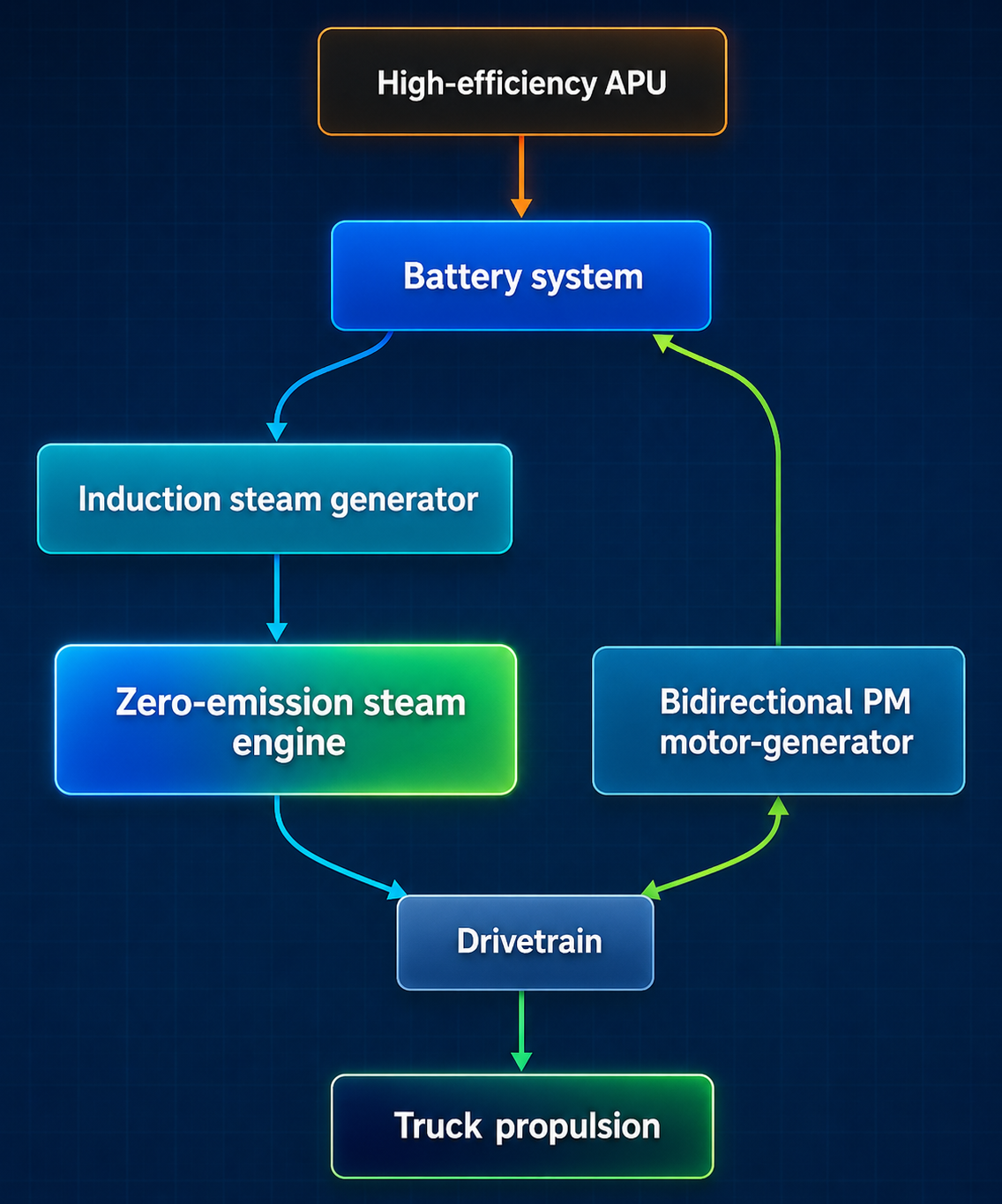
1. Steam Is Produced Electrically
The battery-powered induction steam generator rapidly heats water into high-temperature, high-pressure steam.
2. The Steam Engine Powers the Truck
Steam enters the high- and low-pressure cylinders of the compound engine, producing the mechanical power and torque needed to move the truck.
3. Energy Is Recovered
The permanent magnetic motor generator, regenerative braking and heat-recovery technologies capture energy that would otherwise be lost and return it to the battery system.
4. Electric Assist Is Available When Needed
During selected acceleration, urban and climbing
conditions, the permanent magnetic motor generator can provide supplemental power to the drivetrain.
5. The APU Supports the Batteries
A compact, high-efficiency diesel APU supports battery charging during operation and while the truck is parked. It replaces the type of conventional APU already commonly installed on long-haul trucks.
6. Water Is Reused
After powering the engine, the steam is condensed back into water and returned to the system for continuous closed-loop operation.
Key Advantages
Built Around the Real Needs of Trucking Fleets
Zero-Emission Steam Engine
The BrixRae steam engine does not burn fuel and produces no direct engine exhaust emissions.
Substantially Lower Diesel Consumption
The system is designed to reduce total diesel consumption by as much as 70–75%, subject to prototype and road validation.
No Public Charging Dependency
Onboard generation and energy recovery support the batteries without requiring routine stops at public charging stations.
Retrofit Existing Trucks
BrixRae is being designed for installation in existing Class 8 trucks, allowing fleets to preserve their investment rather than replace the entire vehicle.
Long-Haul Power and Torque
The compound steam engine is designed to deliver the sustained power and high continuous torque required for heavy freight and changing terrain.
Lower Operating Costs
Reduced diesel use and reduced dependence on conventional diesel-engine emissions equipment are expected to lower fuel, maintenance and downtime costs.